
Serving and protecting your country is one of the most significant accomplishments a person can achieve. But for many, the journey doesn’t end when the uniform comes off.
The transition back to civilian life can be one of the most challenging chapters, filled with both reflection and uncertainty. The highs and lows of military service leave a lasting mark, and for those who thrived on discipline, camaraderie, and adrenaline, life after service can feel strangely quiet.
That’s why finding purpose and passion again is so important.
For many veterans, martial arts—particularly Muay Thai—offers a robust and healthy outlet. It provides structure, physical challenge, and a renewed sense of drive.
An Interview with US Navy Veteran Chris Susa
Transitioning out of the military is never easy. For many veterans, the structure, adrenaline, and sense of purpose that comes with service are complicated to replicate in civilian life. But for Chris Susa, a U.S. Navy veteran from Sacramento, California, that sense of challenge and focus found new life through Muay Thai training in Thailand.
We caught up with Chris after he completed a month-long camp at Khongsittha Muay Thai in Bangkok to talk about his military background, his journey post-service, and why he believes martial arts can play a decisive role in a veteran’s transition to civilian life.
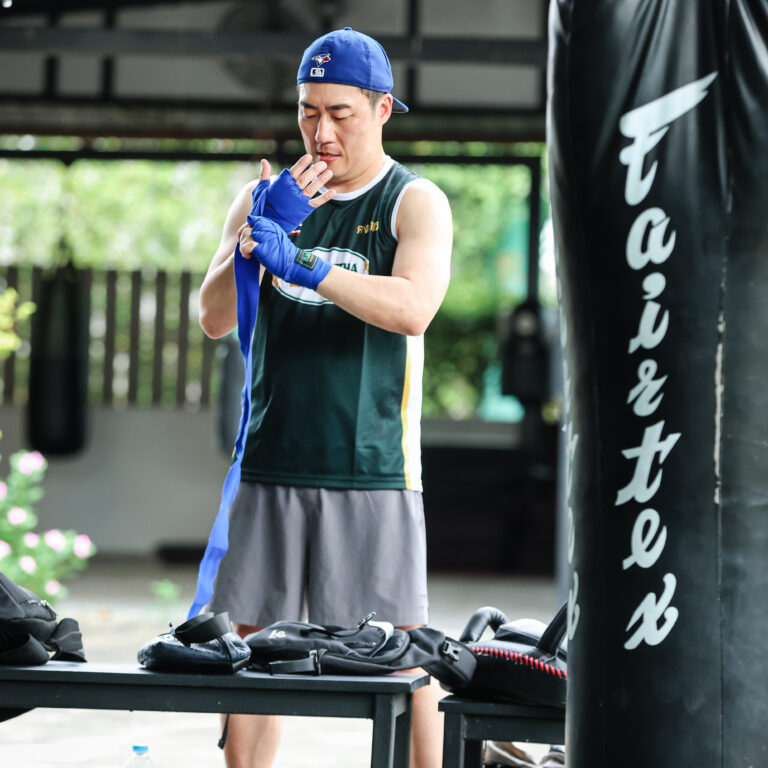
Chris Susa, a US Navy veteran, is one of those people. After leaving the military, he faced the same questions many do: What now? Where do I go from here? In February 2017, Chris attended a training camp at Khongsittha Muay Thai in Bangkok, where he discovered a new path.
Muay Thai became more than just a sport—it filled the void left by military life. It gave him the discipline, challenge, and connection he was missing.
We sat down with Chris to hear his story. Through his words, we hope to inspire other veterans to take that first step—to seek out something meaningful, and to keep moving forward.
KST: Where are you from, and what did you do in the military?
Chris: I’m from Sacramento, CA, and I enlisted when I was 18. I served as a Master Explosive Ordnance Disposal (EOD) Operator in the U.S. Navy.
KST: How long did you serve, and what were some of the highlights of your military career?
Chris: I was in for 8 years. I had the privilege of traveling around Europe and working in several different countries. I did dive operations all over the place, augmented Army Special Forces and the Secret Service, and when I was stationed in Guam, my team was tasked with recovering and disposing of unexploded WWII ordnance. It was a challenging but fulfilling career.
KST: What were your thoughts after leaving the military? Did staying in shape factor into your post-service plans?
Chris: Definitely. I always loved physical activity—that’s part of why Thailand was so appealing. Muay Thai is such a grueling and demanding sport. Plus, the food is fantastic and the culture is laid-back. My plan after leaving was to stay overseas and use the GI Bill from the VA. I wasn’t entirely sure what I’d do next, but I knew I wanted to keep pushing myself.
KST: Did you have any previous martial arts experience before training Muay Thai?
Chris: I did Taekwondo and some boxing when I was growing up. In the military, we also had a few combatives programs that were kind of like early versions of MMA. But Muay Thai stood out to me—it’s such a well-rounded striking art. That’s what made it really appealing.
KST: What was your experience like at Khongsittha?
Chris: I did a one-month training camp and completely fell in love with the sport. What I’d seen of Muay Thai before—through the military—didn’t even come close to showing how technical and deep the sport is. Training in Thailand gave me a whole new appreciation for it.
KST: What are the similarities between military training and Muay Thai?
Chris: In the Navy, we had to be proficient in so many different disciplines—diving, HALO jumps, weapons, and of course, EOD. When you’re new, it’s overwhelming how much there is to learn. Muay Thai is the same. It’s incredibly nuanced and technical. Just like people assume EOD is “just disarming bombs,” a lot of people think Muay Thai is just kickboxing with elbows and knees—but it’s so much more than that.
KST: Why do you think martial arts is helpful for veterans?
Chris: Leaving the military is tough. You go from structure and constant challenge to a world where everything feels loose. Martial arts helps fill that gap. You’re pushing yourself physically and mentally, and you’re part of a community. That’s a huge benefit. Muay Thai, especially, gives you that sense of purpose again.
KST: What advice would you give to other veterans transitioning out of service?
Chris: Have a plan—and execute it. It won’t be easy, which is why those transition programs exist. There’s also a tendency among veterans to tough it out alone. That lone-wolf mindset can work against you in civilian life.
The reality is, coping with the things we’ve seen or experienced doesn’t happen overnight. A lot of vets deal with depression or feel lost without direction. That’s why it’s so important to stay active, stay challenged, and stay connected. Camaraderie, mental toughness, physical discipline—those things don’t have to end when your service does. Muay Thai is a great way to keep them alive.
Chris’s message is clear: if you’re struggling to find purpose after the military, get moving. Whether it’s signing up at your local gym or flying out to Thailand to train, martial arts can offer not just a new outlet, but a new mission.