
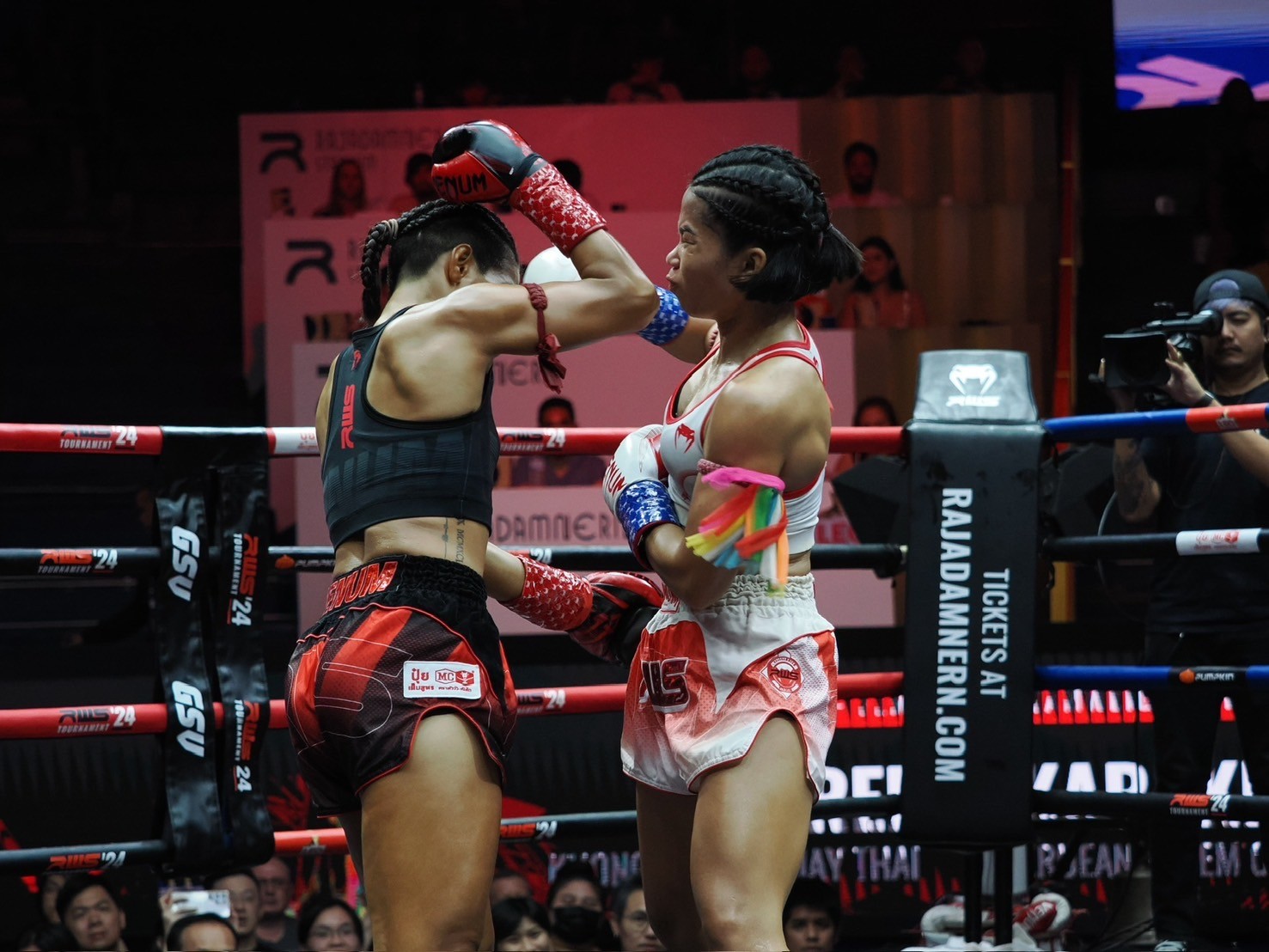
Muay Thai is the official martial art of Thailand and can also be referred to as a “Thai Combat Sport”. The primary focus of Muay Thai is to use stand-up striking and to couple it with multiple clinching techniques to subdue an opponent.
It’s seen in today’s society as a combat sport and is widely utilized in various mixed martial arts and practiced all over the world.
The Origin of Muay Thai
The first documented use of Muay Thai in Thailand dates back several hundred years. In its earliest form, it was a straightforward form of close combat, with the primary focus on turning the entire human body into a weapon.
Also known as the “Art of Eight Limbs,” your limbs are represented as weapons of war.
- The sword and dagger represent your hands.
- Your shins and forearms, after years of training, had become as hard as armor, protecting you from blows.
- Your elbow is capable of beating down large opponents as if it were a hammer or a mace.
- Finally, your legs and knees represented the axe and the staff.
All of your limbs were to act as if they were one unit. Your knees and elbows were used as a way to test the defenses of your opponent, and once you found an opening, you would use grappling to take the enemy down to the ground for the kill.
As a fighting style, scholars believe that it was first developed centuries ago when Asian tribes from the south migrated into Vietnam, Burma, Laos, Cambodia, and what would eventually be called Siam.
The largest and fiercest of these tribes at the time was the Tai, and they were in constant warfare with smaller tribes as they traversed the Southern Steppes to reach new land.
As they progressed, they became well-trained, hardened, and developed rudimentary military tactics grounded in Muay Thai. It was through these times that a new martial art was born.
Muay Thai in Thailand
Fast-forward a few hundred years, and the Tai (Siamese) eventually settled in Siam, which is now modern-day Thailand. Siamese soldiers would learn Muay Thai from their fathers and pass it down from generation to generation. Through decades of trial and error, Muay Thai evolved into the most effective form of hand-to-hand combat in this region.
The Thais were virtually always defending their borders against attacks from their neighbors, Burma and Cambodia. The conflict between Burma and Thailand was fierce during this time period, and thousands of soldiers from both sides perished. To defend the kingdom, Muay Thai was a mandatory part of training for Thai soldiers and continued to be so after the Burmese/Thai Conflict.
Thai men who had returned from military duty would have Muay Thai sparring and village matches for sport. Many provinces and towns would support their Muay Thai “prize fighter” who had beaten all competitors nearby. Older warriors and veterans of many tours became Muay Thai teachers whose responsibility was to transfer knowledge to younger generations.
Muay Thai was like this for well over 500 years until it became modernized in the 19th century as a national sport.