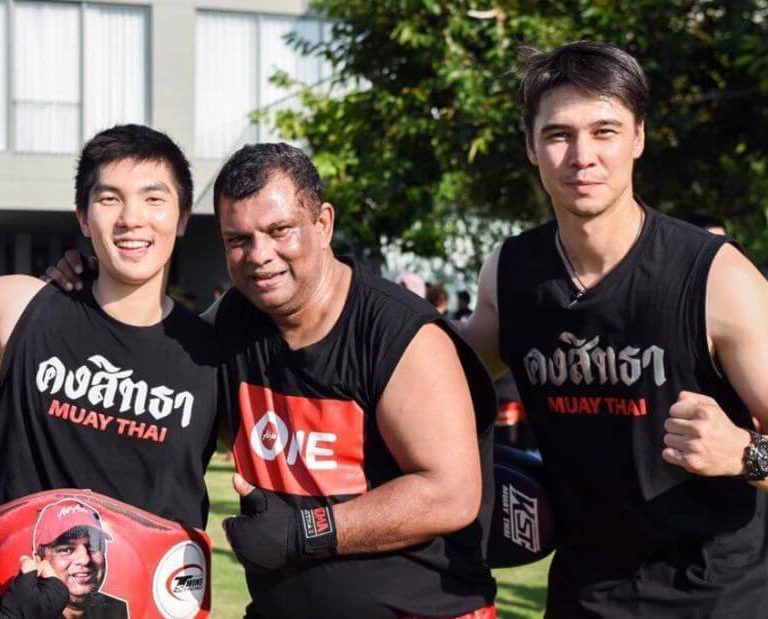

In Thailand, you’ll see that the majority of successful Muay Thai fighters start young, some even beginning their careers before attending school. Many were introduced to the sport to provide for their families’ basic needs. Muay Thai is regarded as a way of life, and Nak Muay are highly respected within their local communities.
This is particularly true in the northeastern region of Thailand, known as Isaan. Isaan is one of the country’s poorest regions, where farming and small-scale labor are the primary sources of income. Children in Isaan often start training in small local gyms or even at home with family members.
In Isaan, Nak Muay often receives support and guidance from the community. Their successes bring pride to their villages, and the discipline and respect instilled by early Muay Thai training are highly valued. The sport shapes not only their physical abilities but also their social and cultural identity.
In Thai, the term “Nak Muay” translates to “boxer” or “fighter”.
Nak (นัก) = someone who practices or is skilled in a particular field/profession
Muay (มวย) = boxing or martial art
Why Do Muay Thai Fighters Start Training So Young?
Professional fighters often credit their early start with developing the endurance, adaptability, and focus required to succeed at the highest levels. Fighters such as Saenchai, Buakaw Banchamek, and Rodtang Jitmuangnon all began training and competing as children, carrying the lessons from their youth into their adult careers. The resilience and work ethic built through years of training can shape both their athletic performance and personal growth.
Young nak muay have little time to play or engage in activities outside Muay Thai training. Starting young gives fighters a competitive edge. By the time they reach their teens, they often have more years of experience than peers who began later, increasing their chances of success in professional settings. But at what cost?
It’s a Long, Hard Road
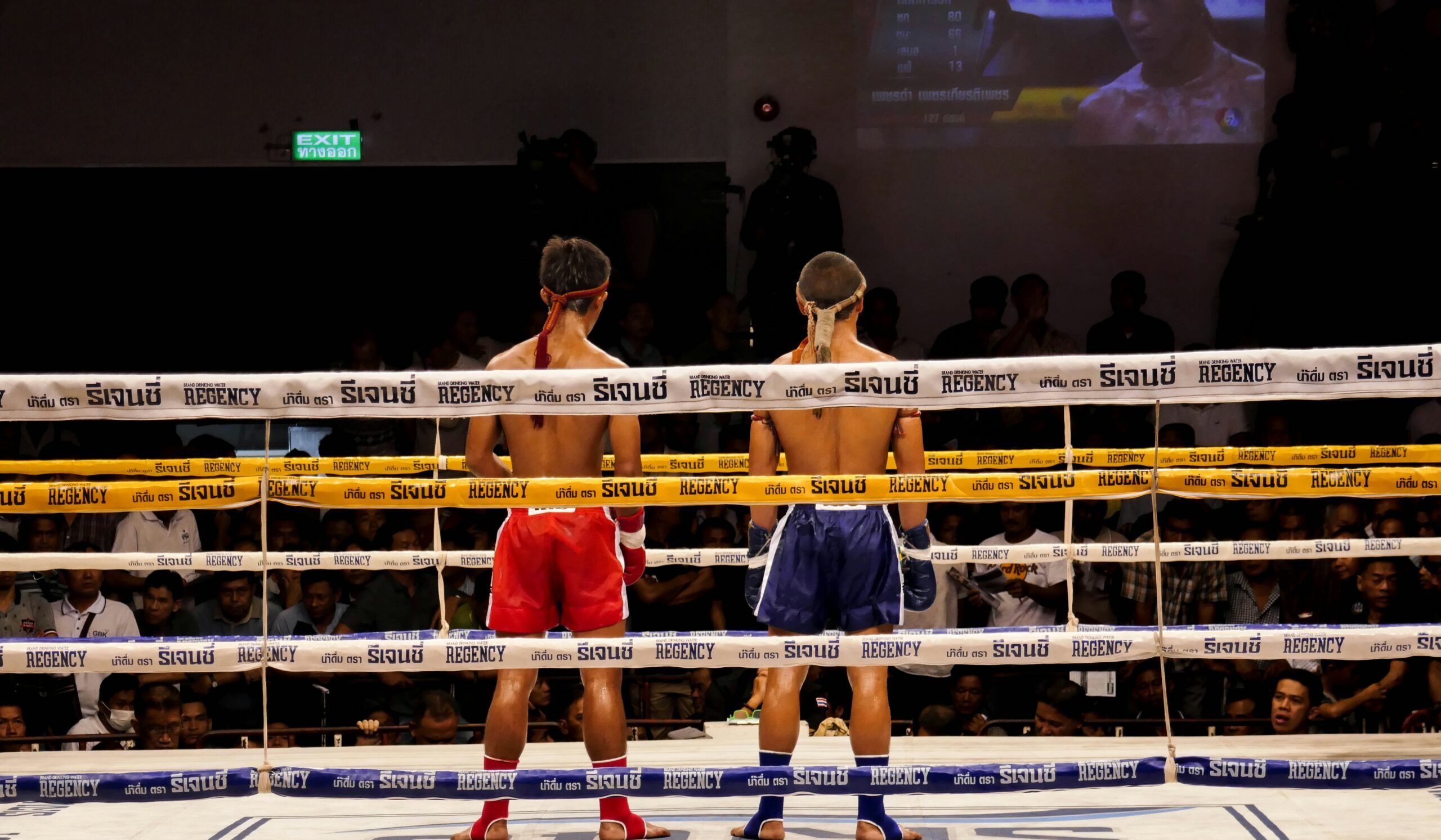
A publication was made about a young boy named Boonsong Samrong, a 12-year-old aspiring professional fighter. His father gave him the option to fight rather than attend school. Preeda, his brother, is also a professional fighter. They come from the Rayong province, where it’s typical to see bouts between children raise to $15,000 in high-stakes betting every week.
Preeda is a construction worker, making between $20 and $30 per day for hard, laborious work. The boy fighter can earn $100 per fight if he is victorious, which is an incredible amount of money for a struggling Thai family. Boonsong hopes to become a champion one day, relocating from Rayong province and competing in prestigious Bangkok stadiums such as Lumpinee and Rajadamnern. It is a demanding and intense lifestyle, involving countless hours in training camp, running on the roads, and enduring painful injuries.
Many children have instances of brain damage at a young age from repeated hits to the head, and the majority of child fighters are absent from school due to training. Professor Sombat Ritthidech of the Ramajitti Institute (a Thai non-profit research and advocacy organization focused on children, youth, and education) states that, unless changes are made, there will be a continued trend of child athletes who are unable to transition to everyday life after Muay Thai.
Gambling & Economic Pressure
Betting and gambling on fighters of any age remain a significant part of the world of Muay Thai. It’s intertwined with the culture of fighting in Thailand, and in many cases, the stakes and bets are much higher in fights between young nak muay than in more established ones. There are areas in Thailand where families earn less than $ 2,000 USD per year, primarily through farming or selling small goods.
A fight between two rising nak muay can attract thousands of dollars, and large bets are common. You can see the appeal to a young fighter and their family of training hard and reaping the rewards of the stress and hardships that come with a fighter’s life. For families facing economic hardship, the incentive is clear: a child’s victory can provide income equivalent to weeks or even months of manual labour.
These young fighters typically have their bouts at town festivals and fairs. It’s a righteous sport, and many in Thailand are happy to see it continue, but not everyone sees it as a cultural pastime that should remain in Thailand.
Tradition Versus Change
Muay Thai remains a source of pride and identity in Thailand, and the issue of child fighters sits at the heart of a broader cultural debate. Supporters argue that the sport provides discipline, income, and opportunity. Critics question whether tradition justifies the physical and educational sacrifices required of children.
As of 2025, the conversation continues. Change is occurring slowly, shaped by modern sports science, international scrutiny, and evolving attitudes within Thailand. The challenge lies in preserving the soul of Muay Thai while ensuring the safety, education, and future of the children who carry it forward.
Child Protection Laws and the 2025 Reality
Thailand introduced child protection regulations in 1999 that restricted professional competition for individuals under 15. In later years, amendments sought to limit head strikes for younger fighters and introduce medical oversight. However, as of 2025, enforcement remains uneven.
Children can still compete with parental consent, and many bouts are classified as “exhibitions” rather than professional fights. Medical checks vary widely, particularly outside major stadiums. Advocacy groups continue to push for stronger protections, including stricter age limits, compulsory education requirements, and nationwide enforcement standards.
Medical professionals have raised long-term concerns about repeated head trauma, developmental delays, and difficulties transitioning into adult life after fighting careers end. Researchers from institutions such as the Ramathibodi and Ramajitti medical institutes have consistently warned that without reform, many child fighters may struggle physically, emotionally, and socially later in life.
What do you think? Should children be fighting?
Further reading:
https://www.foxsports.com/storie s/other/thailands-child-boxing-debated-after-13-year-olds-death
https://www.equaltimes.org/fight-school-the-children-of-muay?lang=en
https://www.mirror.co.uk/news/world-news/thailands-child-kickboxers-who-fight-7528124