
Muay Thai is the art of eight limbs. Practicing your shadowboxing, building stamina through endurance training, and learning techniques to overcome your opponent in the ring are all crucial to this sport we love.
One critical aspect that isn’t often mentioned when people first start training Muay Thai is that you’ll sustain many small bruises, cuts, and other minor injuries in the gym.
I can almost guarantee it. That’s why we’re going to cover the basics of hand wraps and how to wrap them properly so you can get the most out of your training.
Why Do We Use Hand Wraps?
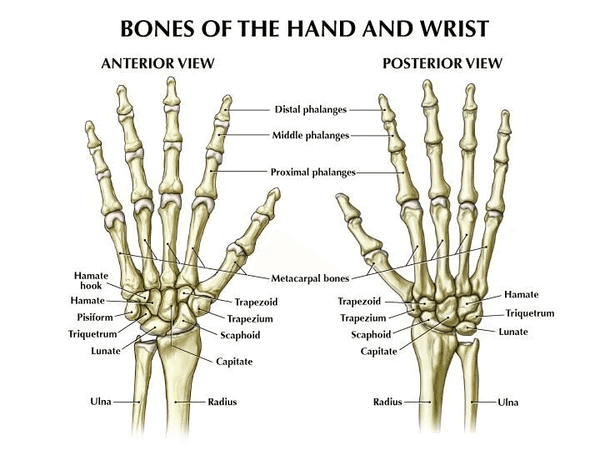
There are a total of 27 bones in each of our hands, and they’re all responsible for allowing a full range of movement.
These bones, while resilient, are just as susceptible to injury during a fight as they are during training.
Have you tried punching a heavy bag without wraps on? It’s a bit painful. The padding from proper hand wraps would allow you to punch it harder and for a more extended period of time, too.
Wrapping your hands for Muay Thai, boxing, or MMA protects your knuckles, makes sure your bones don’t break, and secures your fragile wrists. Compression and padding are the two primary methods by which hand wraps do this, which is why you must wrap them properly during training.
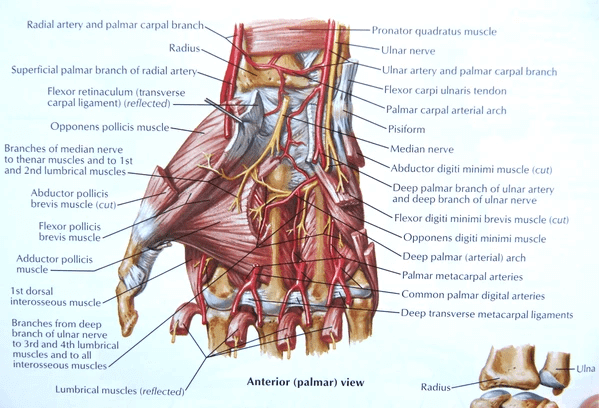
Above is a complex, detailed analysis of the nerves in our hands.
Compared with the rest of the body, the nerves in our hands constantly send signals to our brain and back.
One aspect not talked about enough is the potential nerve damage that can happen due to repeated use of the hands in a forceful way.
While the main risk of getting carpal tunnel syndrome is genetic, hitting a bag, pad, or person the wrong way can pinch nerves, making you more susceptible.
What Kind of Hand Wraps Are Out There
There are three main types of wraps used for combat sports, but let’s focus specifically on Muay Thai.
Cloth wraps are standard across Thailand at the moment and are definitely the simplest to put on.
Other types of wraps include gauze and tape wraps, and elastic bandage wraps.
Here’s a diagram below, with pros and cons to each of them:
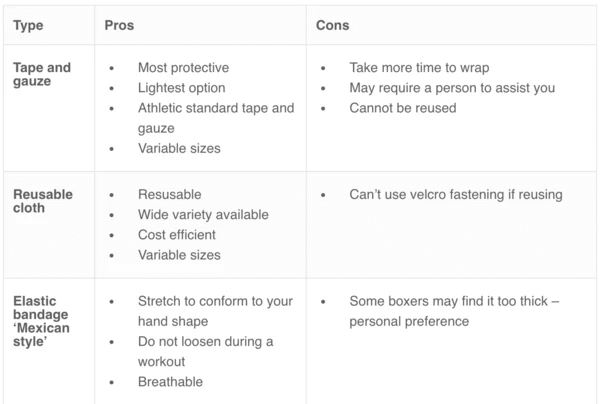
An excellent reference image from an article by BoxFitUK
The proper way to wrap hands for Muay Thai is to focus on knuckle padding. When you create that padding, it provides an extra layer of protection when you hit the heavy bag or pads.
Using small gloves to hit a heavy bag doesn’t provide much protection for the knuckles. The extra padding at the start of this method helps keep the knuckles firmly secure and protects them from damage. For what it’s worth, I recommend using 14-16oz gloves when doing bag work.
If you can learn to wrap your hands using this method, it will feel natural.
With your knuckle and wrist properly secured, the chance that you get injured during training decreases significantly.
What Are The Wrong Ways to Put On Wraps
- Putting Wraps on Too Tightly: Wrapping your hands too tightly will soon become uncomfortable. You lose mobility, blood circulation, and it’s an all-around nightmare to train in.
- Not Wrapping Tight Enough: When you don’t wrap them tightly enough, they will fall apart during training.
- Rolling the wraps with the wrong side down: If you start your wrap the wrong side down, you’ll end up having to re-wrap them at the end. Make sure the logo side faces away from your skin to avoid this. If you’ve already started your wrap, when you reach the end and are velcroing or clipping on the remaining portion, flip the end to do so.
- Not making a fist: There are specific points that you will need to make a fist in order for your wraps to fit snugly. Watch the video below to make sure that you know when to make a fist.
- Failing to support your wrist properly: If you don’t give your wrist enough loops with your wraps, you might not have adequate support when you punch. If your wrist is not secured correctly, you may sprain it if you hit a hard, heavy bag.
The following videos from various sources demonstrate proper hand wrapping. Take a look and learn the different ways to provide maximum protection for your hands.