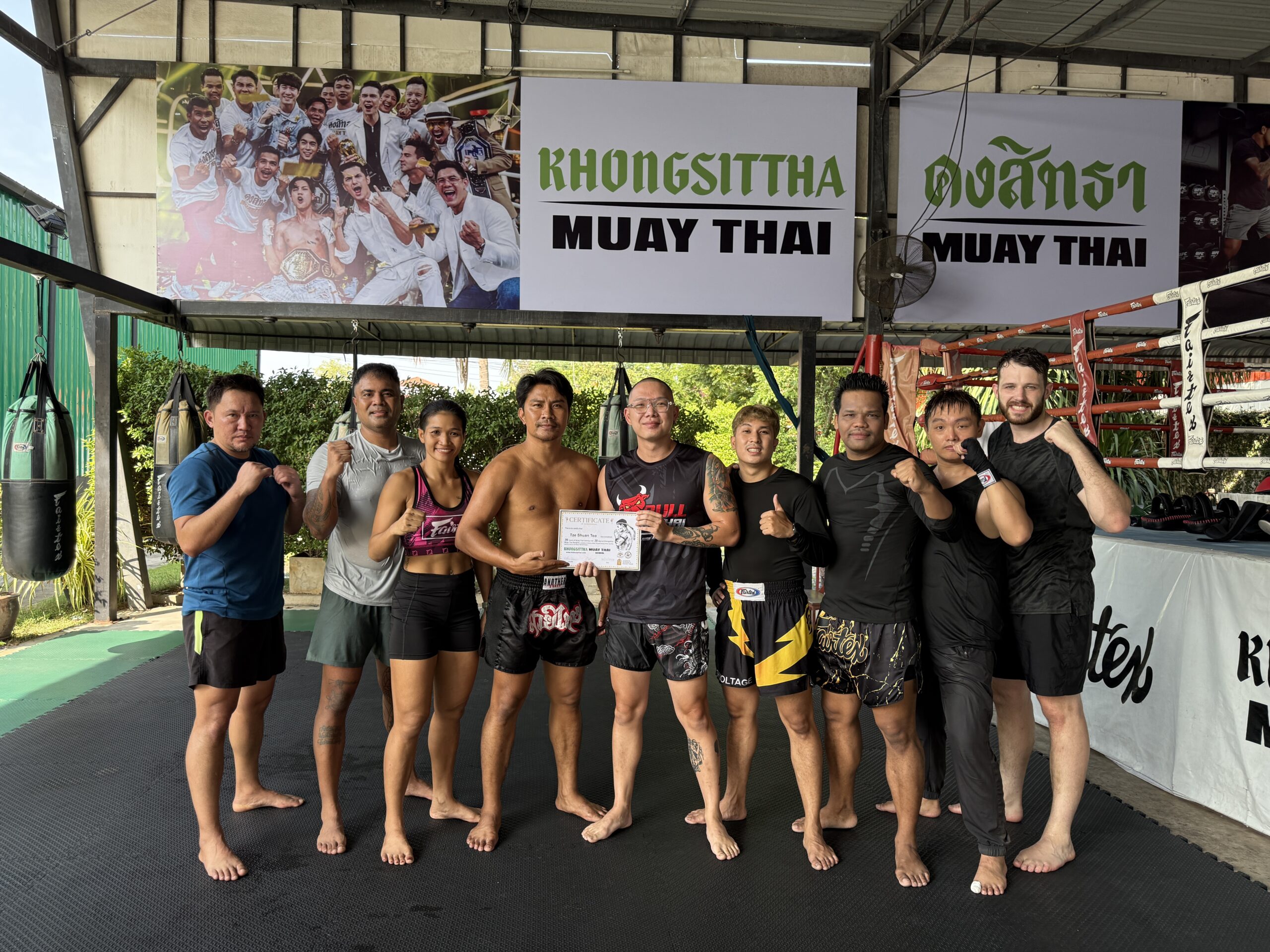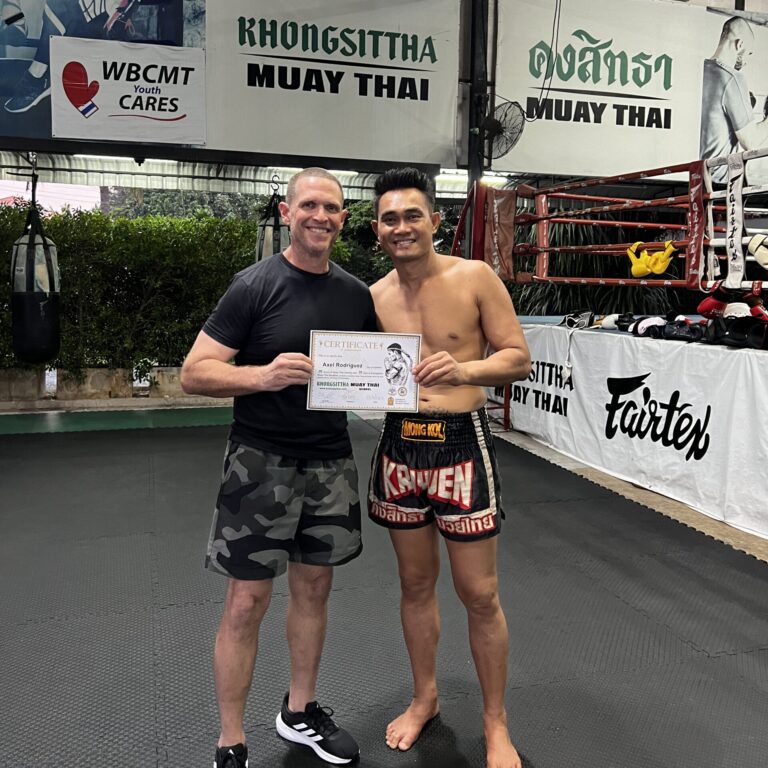

If you’re planning to train Muay Thai in Thailand, the Destination Thailand Visa (DTV) can offer an opportunity to stay longer and fully immerse yourself in the sport and culture.
The DTV is valid for up to 5 years. Each entry is granted for 180 days (6 months).
Students are required to leave Thailand and re-enter for another 180 days if they wish to extend their stay, and can do so for up to 5 years.
Whether you are completely new to the sport or already have years of experience, longer stays offer students ample time to develop their technique, fitness, conditioning, and understanding of traditional Muay Thai.
Applying for a visa is only one part of planning a longer Muay Thai stay in Thailand. Students should also consider how long they want to train, their accommodation, travel plans, and what type of training schedule will suit their goals.
At Khongsittha Muay Thai, we welcome students from around the world who come to Thailand to train, and understanding the visa requirements is an important part of organising your stay.
In this article, we’ll review the recent changes to DTV applications for 2026, including what Muay Thai students need to know when applying and preparing their documents, so you can start planning your training experience with greater confidence.
DTV Application Updates 2026
1. Background checks are now required
As of 31 August 2026, people applying for a new DTV (Destination Thailand Visa) must provide a criminal record/police clearance certificate as part of their application.
The exact certificate and how recently it must have been issued can depend on the Thai embassy/consulate handling your application.
2. Apply from your home country or country of permanent residence
As of 31 August 2026, DTV applicants must show that they are permanent residents of the country where they are applying.
This means you generally cannot travel to Thailand (or another country where you’re only visiting) and apply for a DTV there.
This replaces the previous requirement of a general document showing current location, such as a hotel booking. Applications submitted before this date are processed under the prior rules.
Regardless of your category, all applicants must submit the following documents:
- Identity Documents: Passport biodata page and a passport-sized photograph (white background)
- Proof of Permanent Residence: Official documentation confirming your permanent residence
- Certificate of Criminal Record Clearance: A police clearance certificate or equivalent, issued by the relevant authority
- Financial Evidence: Proof of at least 500,000 THB in savings for the last 3 months through an official bank statement (Cryptocurrency and investment-based statements are not accepted as financial proof.)
- Visa Fee Payment: 10,000 THB (or equivalent in local currency, depending on the embassy or consulate)
Note: Specific document requirements, including bank statement duration, accepted proof of remote work formats, and financial evidence standards, may vary by embassy or consulate. Processing requirements and document standards may vary depending on the embassy handling your application.
For Muay Thai Soft Power, the following documents are required:
- Confirmation of participation (such as an enrollment or acceptance letter)
- Copy of the institution’s business registration
Enrollment in the DTV Package with Khongsittha Muay Thai provides students with the required supporting documents.
- Official program confirmation letter for your DTV application
- Applicable supporting school and company documents
DTV Package at Khongsittha Muay Thai
What’s included:
- Twice-daily training, six days per week, with a complete Muay Thai curriculum.
- Private on-site accommodation at our partner resort or training-only options (group sessions or private sessions).
- Official visa support and documentation to assist with the DTV application process.
- Certificate of completion for your training.
Who it’s best for:
- Students seeking consistent training without frequent visa runs.
- Remote workers or digital nomads who want to base themselves in Bangkok.
- Those committed to a serious training program with measurable progress.
Pros:
- Legal long-term stay of up to six months per entry.
- Deep immersion in Muay Thai training and gym culture.
- Stability and flexibility to integrate training with lifestyle or work.
- Training is suitable for beginner, intermediate, and advanced levels.
Cons:
- Requires proof of funds and careful visa preparation.
- Requires more time and planning than shorter options.
- 90 Day reporting to immigration and a 180-day visa re-entry are required.
For more information and pricing, please check out the DTV Package!