
Wai Khru Ram Muay: Respect, Ritual, and Tradition in Muay Thai
In our previous article, we explored the mystical history and spiritual significance of Sak Yant tattoos.
While not every Muay Thai fighter bears sacred ink, many martial arts traditions include forms of body art or ritual believed to offer protection and guidance. An even more universal and visible tradition within Muay Thai, however, is the Wai Khru Ram Muay.
In many cases, fighters dedicate just as much time to perfecting their Wai Khru as they do refining their strikes, footwork, and technique.
This ritual is not an accessory to Muay Thai—it is a core part of the art itself.
The Purpose of the Wai Khru Ram Muay
The Wai Khru Ram Muay is a ceremonial dance performed before a fight. Its primary purpose is to bring harmony between the mind, body, and spirit. It is also the fighter’s way of paying respect to their teacher, lineage, and the traditions that have shaped them.
Deeply rooted in Buddhist belief, the Wai Khru serves several roles: a ritual of respect and gratitude, a mental and spiritual centering practice, and a physical warm-up before combat.
Though graceful in appearance, a well-executed Wai Khru requires strength, balance, patience, coordination, and self-control—qualities just as essential as those needed to land effective strikes in the ring.
The Meaning Behind the Words
Understanding the terminology clarifies the ritual’s depth.
Wai is the traditional Thai gesture of respect, performed by pressing the palms together and bowing.
Khru, or Kru, means teacher. Ram means dance, and Muay translates to boxing.
Together, Wai Khru Ram Muay can be understood as a respectful dance to honour one’s teacher through boxing.
Wai Khru as a Thai Cultural Tradition
Respect for elders and teachers is deeply ingrained in Thai culture.
The Wai Khru ceremony is not exclusive to Muay Thai and is observed across many educational and artistic disciplines in Thailand. In schools, students participate in an annual Wai Khru ceremony in which they pray for guidance in the coming year and formally show gratitude to their teachers. Offerings often include candles, incense, flowers, and symbolic arrangements.
In Thai music and dance schools, the ceremony takes on a more traditional and religious form. It is typically held on Thursdays, a day considered sacred in Thailand as it is associated with Brishapati, the god of teachers and learning.
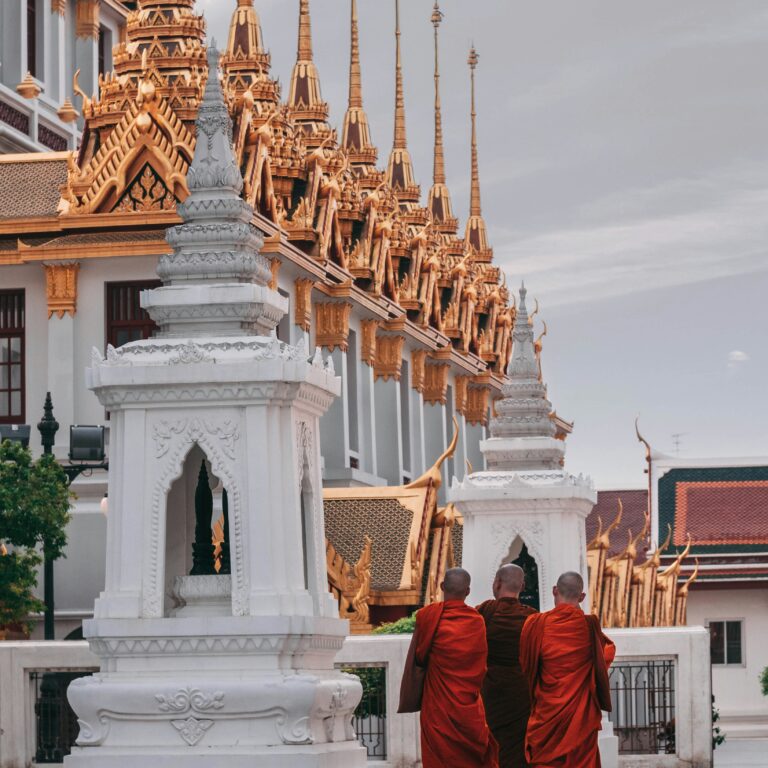
In some cases, Buddhist monks are invited to chant prayers, and alms are offered before the ceremony to underscore its spiritual significance.
Wai Khru Ram Muay and Muay Thai
The Wai Khru Ram Muay is specific to Muay Thai boxing; although individual movements may vary across gyms and regions, the foundation remains rooted in Buddhist tradition and cultural respect.
Historically, Muay Thai was performed during festivals, ceremonies, and royal events, with fighters paying homage to their teachers, ancestors, and spiritual beliefs. It was also a way for Thai soldiers to display physical strength, discipline, and combat readiness to peers and superiors.
Although Buddhism is a peaceful religion, Muay Thai is undeniably a violent sport.
The Wai Khru Ram Muay serves as a symbolic act of humility—asking forgiveness for the brutality of combat through a ritual rich in grace, art, and reverence.
It reminds both fighters and spectators that Muay Thai is not merely about aggression, but about discipline, respect, and tradition.